

Game info
Match-3, Aquarium decoration, Puzzle
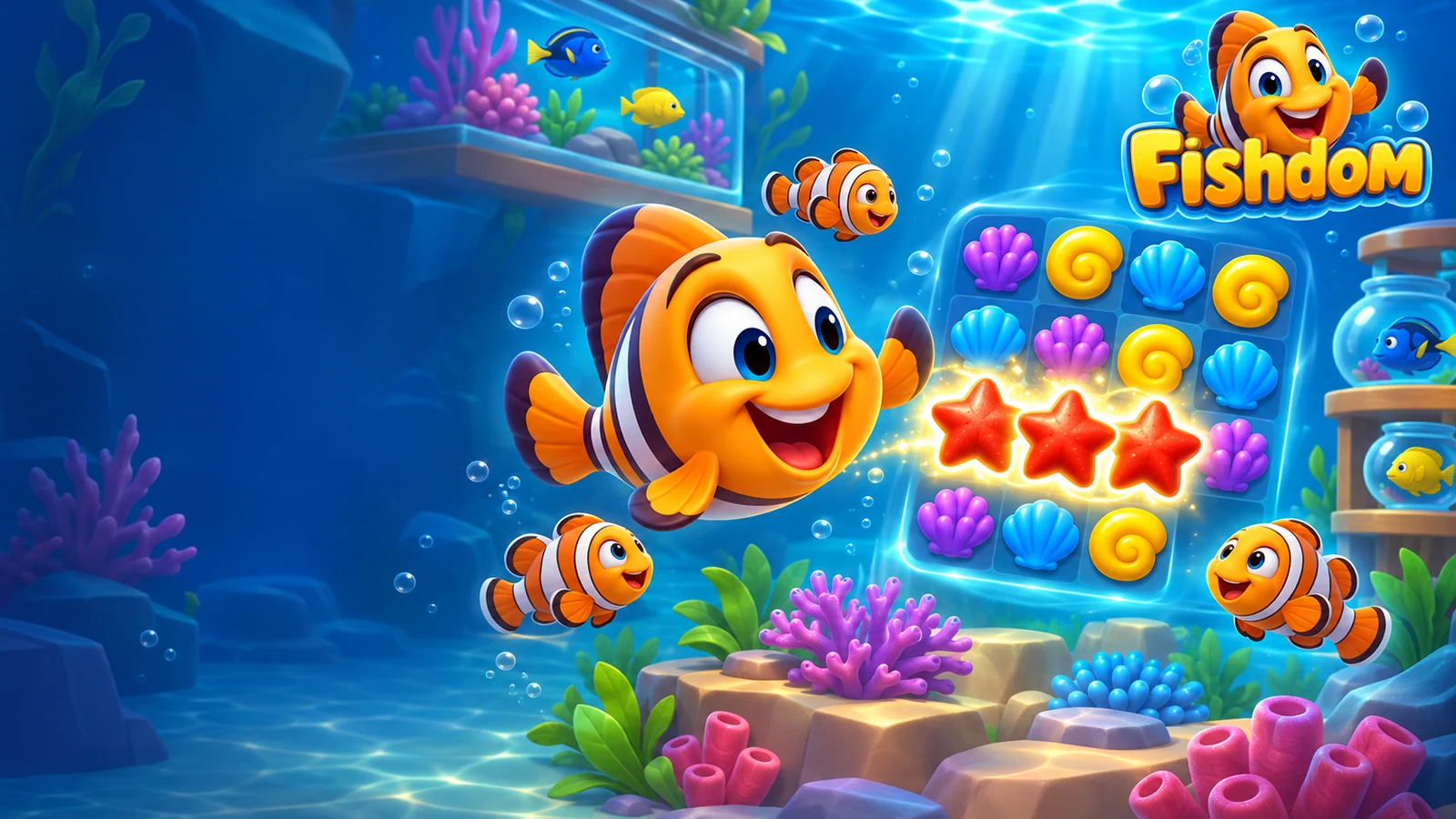
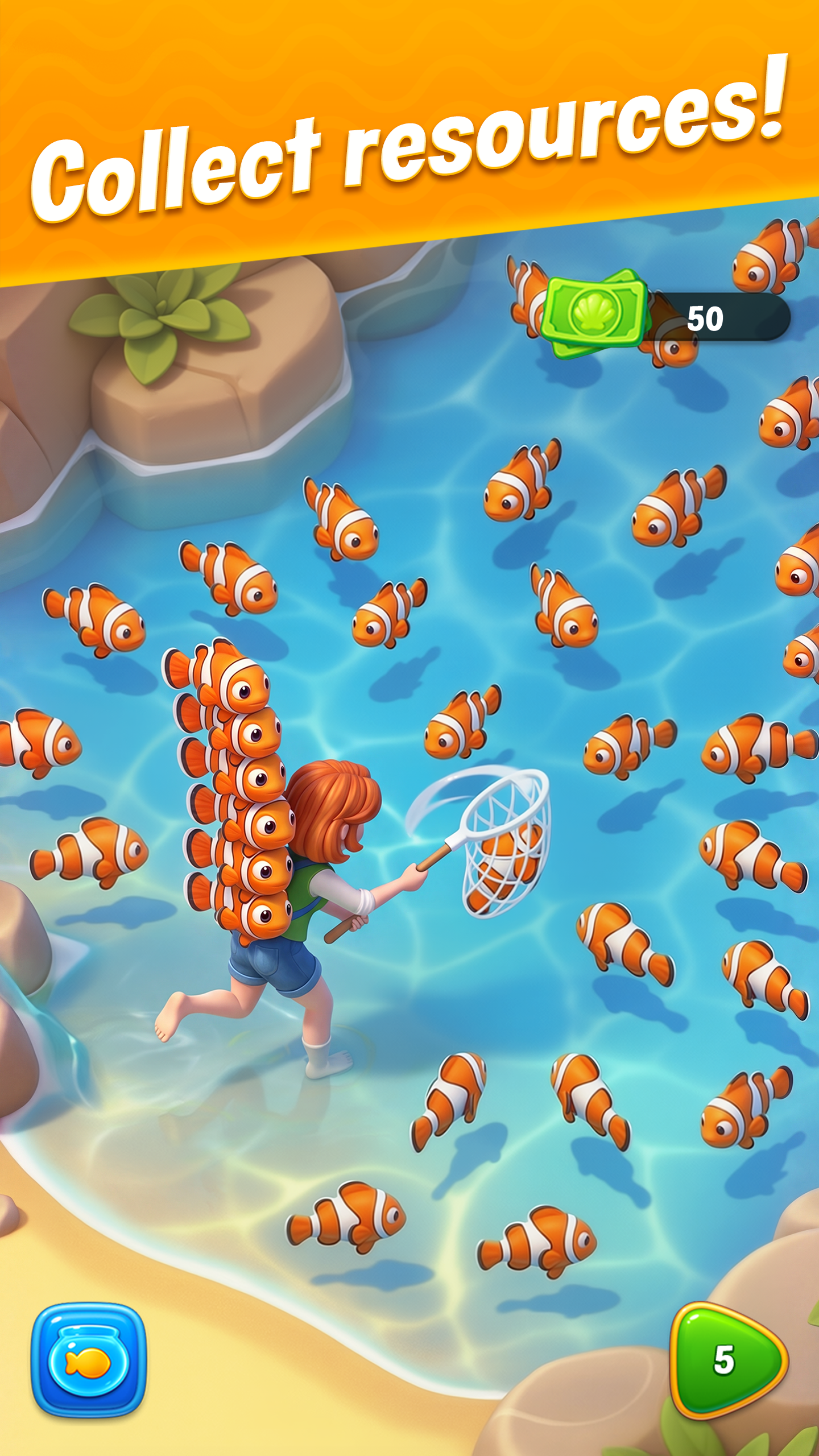
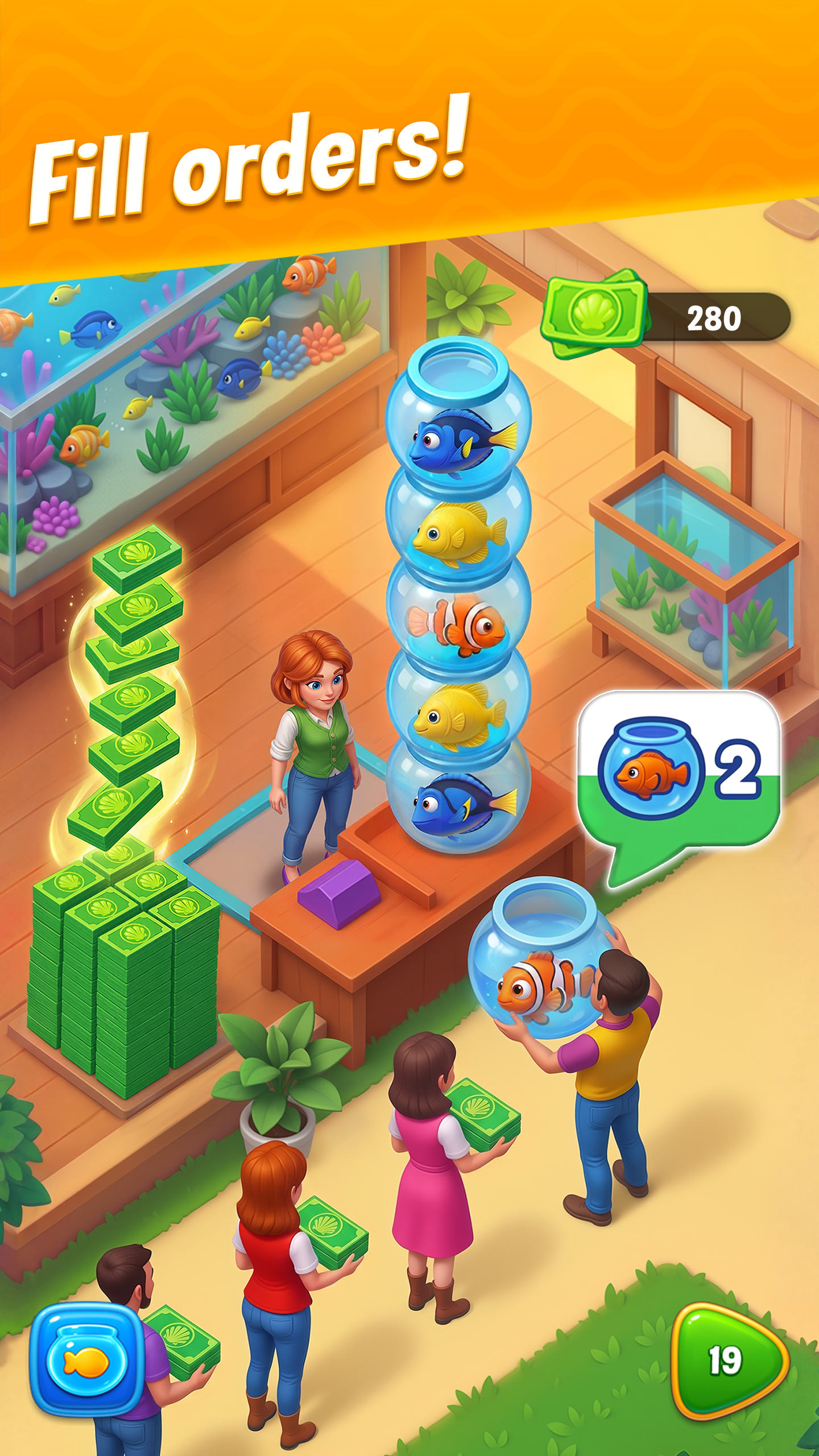
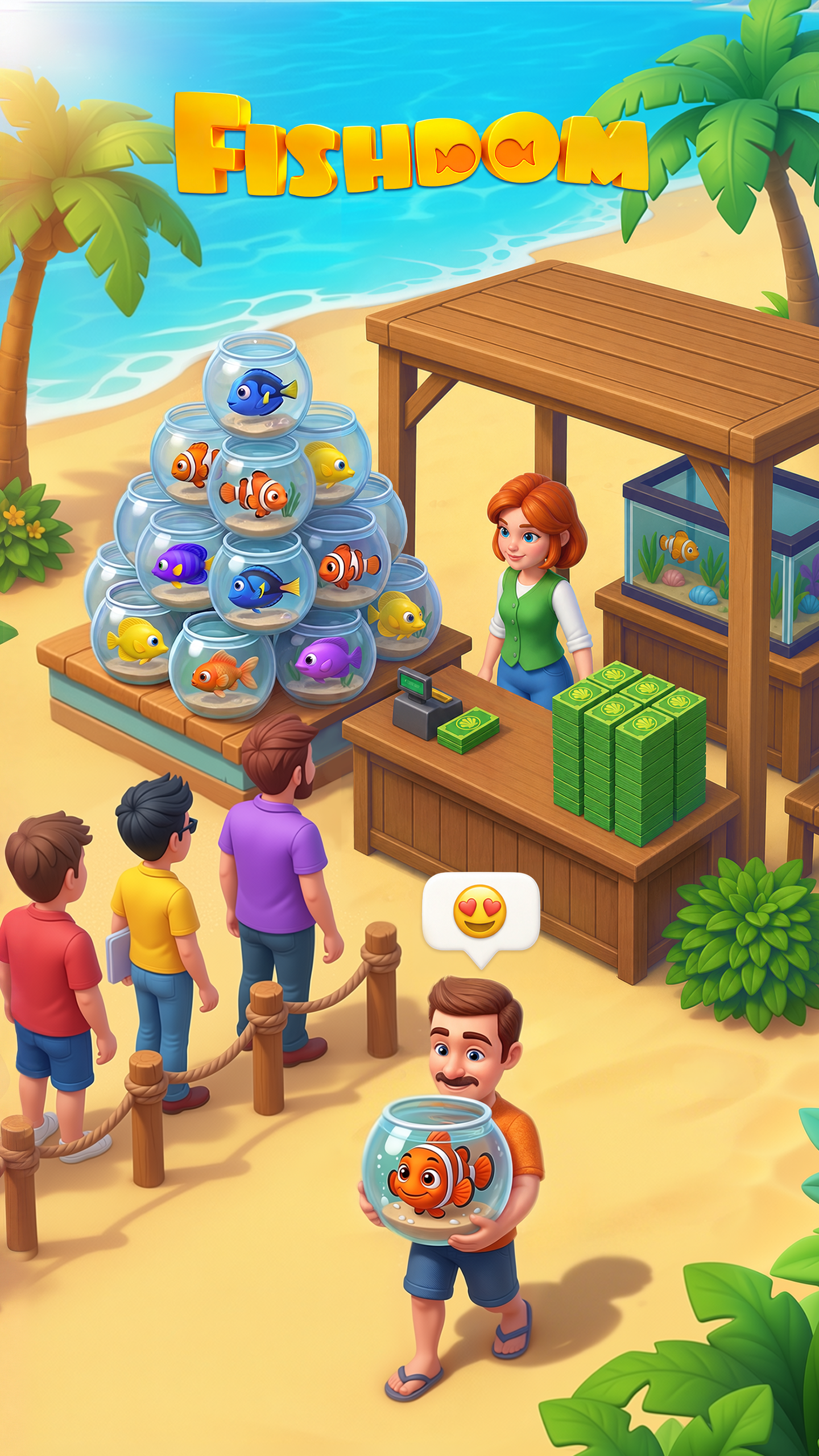
Fishdom combines match-3 puzzles with building and decorating aquariums. The main mobile game asks players to meet board objectives and use the rewards to create underwater homes for fish.
About Fishdom
Fishdom combines match-3 puzzles with building and decorating aquariums. The main mobile game asks players to meet board objectives and use the rewards to create underwater homes for fish.

Gameplay overview
Read the level target and move limit before swapping adjacent pieces. Matches and power-ups remove pieces or obstacles, but clearing an attractive part of the board does not help if the remaining target is elsewhere. Aquarium decorating provides a separate creative reward loop between puzzles.
How to Play
Start from the actual objective. Look for moves that advance more than one target and consider what will fall into the cleared space. If a power-up is available, compare using it now with positioning it for a more useful combination. Avoid spending a limited booster merely to increase an already comfortable score.
Controls
Official match-3 edition: touch or drag adjacent pieces and select boosters. Pin-pulling or fish-eating browser games use different mechanics.
Pro Tips
- Check whether the target is a piece count, obstacle or another board condition.
- Inspect the lowest useful part of the board before an automatic-looking match.
- Reserve difficult-to-replace boosters for a specific problem.
- Keep decorating advice separate from level-solving advice.
Making Better Decisions
Separate the puzzle decision from the aquarium reward. Decorations can be a satisfying long-term goal, but they do not explain which move solves a particular board. On entering a level, locate the pieces or blockers named by the objective and look at the paths through which new pieces can fall. A match that opens the board can make later moves more flexible even if it collects little immediately. If a booster has a limited supply, first ask what exact obstacle it removes and whether the remaining moves can finish the rest of the level afterwards. Avoid treating a rescue advertisement or a separately hosted pin puzzle as a walkthrough for the full match-3 game. The selected edition determines the relevant strategy.
Features, Modes and Progression
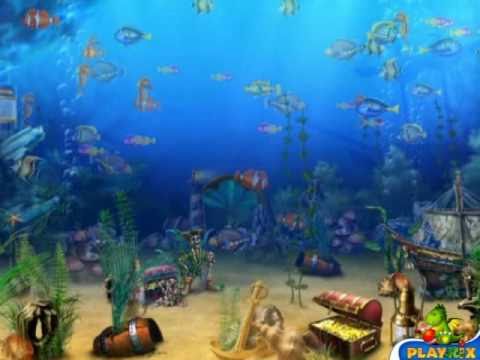
The official app includes aquariums, puzzle progression and events. An old Fishdom desktop game, a pull-the-pin rescue and Fishdom: Fish Eat Fish are separate editions or adaptations.
Spend a move on the level’s actual objective
A large match can be visually satisfying without bringing the level closer to completion. Before moving a piece, identify the objective shown on the board and the area that still needs attention. Compare a simple targeted move with an impressive match elsewhere. If a special piece is available, consider where its effect will go rather than treating every activation as equally valuable. The important question is what the board will let you do next, especially when the number of remaining moves is becoming tight.
Separate aquarium choices from puzzle decisions
Decoration and collection give the wider game a different pace from the puzzle itself. Enjoy those choices without letting a decorative goal obscure the current board condition. When a level is difficult, review the first few decisions and whether they addressed the objective. Repeating the same opening while hoping for a different finish can hide an avoidable planning problem.
Match-three levels support the aquarium you create
Fishdom's published identity combines match-three levels with collecting fish and decorating underwater homes. The puzzle and aquarium are connected but ask different kinds of attention. A level has a target and a board to solve. The aquarium provides a place to make visual choices, enjoy the fish and decide how the space should feel between those challenges.
Decorations are part of the creative appeal rather than a reason to ignore a difficult board objective. When returning to a level, read its requirements afresh. A pleasing aquarium arrangement does not tell you which match will reach a blocked target. Keeping the two activities distinct helps each one provide the change of pace it is meant to offer.
Boosters, community activities and temporary adventures
The official game describes boosters and a broad set of changing activities around its matching levels. Expeditions and season-oriented adventures are examples of the wider event structure. Read the active information before organising a session around a reward, because a temporary activity can change or end. The stable skill is identifying the board condition that matters and choosing an effect that reaches it.
Community and team features can give progress a social setting in the published app. Use the supported account and team options rather than an external offer promising resources. For an ordinary session, a useful rhythm is straightforward: understand the next puzzle target, use the result to develop an aquarium you like and return to another board with a clear objective. Fishdom is distinctive because those careful puzzle decisions and friendly underwater spaces can support each other without needing the same pace all the time.
Reading a Fishdom level from its objective
Fishdom combines match-three puzzles with an aquarium you develop between levels. On the puzzle board, the objective should determine the move. A large match in an unrelated corner may look impressive without reaching the tiles, pieces or obstacles that still matter. Read the target indicators before the first swap, then look at which areas of the board can affect them.
Take a second look after a cascade because the board may now offer a different route. A useful opening can disappear if you continue tapping the same area automatically. When few moves remain, identify what would actually complete the target rather than chasing the largest available animation. The most satisfying finish often comes from a small targeted move that uses the board's current shape well.
Opening blocked areas and using space
An obstacle does more than occupy a square: it can restrict which pieces can reach an important area. Look for moves that improve access as well as moves that score immediately. Opening a corridor may make later matches more useful. If an objective is isolated, compare the effect of clearing near its boundary with making a larger match elsewhere.
Do not treat all board positions as equivalent. Pieces can arrive differently after a match, and the resulting space changes what can be combined next. Try to understand which part of a difficult level is actually constrained. You may need a better supply of pieces near the target, a clearer route for a special effect, or simply a more careful first few moves.
Planning special pieces and combinations
Special pieces are most useful when their effect reaches something important. Before activating one, inspect the path or area affected and compare it with the remaining objective. If another special piece is nearby, read how the current game handles their interaction rather than relying on a combination remembered from a different match-three title. A powerful effect used in the wrong area can leave the difficult part unchanged.
Saving every special piece can be as unhelpful as activating every one immediately. The correct moment depends on the board, the target and the moves still available. Consider whether one ordinary swap could improve the effect's position or whether waiting risks losing a useful opportunity. This is a planning puzzle, not a rule that the biggest combination must always be the best move.
Enjoying the aquarium between puzzle levels
The aquarium gives progress a different pace. Fish, decorations and the arrangement of the space let you make visual choices that are separate from the pressure of a move-limited board. Use those quieter moments to enjoy what a completed level contributed. There is no need to make every decoration choice part of a strict optimisation problem.
When spending an in-game resource, check the item and its current cost on the screen. Temporary offers, collections and event systems can change. A decoration described on an old page may not be available in the same way today. Keep purchases within the game's supported store and avoid external promises of unlimited currency or account upgrades.
A useful retry routine for difficult puzzles
If a level repeatedly ends with the same unfinished target, review the opening. Did the early moves address that target, or did they mostly collect easy matches? Try changing that decision while keeping the rest of the plan understandable. Repeating the identical opening and hoping for a different final cascade can hide a problem you can actually influence.
For a short session, focus on learning one board condition: how an obstacle opens, where a special effect is useful, or which target is hardest to reach. Pause when the board stops being readable. The next attempt will be more useful if you remember a concrete observation rather than only that the level felt difficult. Clear piece visibility and deliberate taps help on both a small touch screen and a larger display.
Fishdom's official information and related puzzles
Playrix's Fishdom page and the official store listings below identify the published game. Current in-game information is the best place to confirm a changing event or feature. The enduring part of Fishdom is the relationship between a thoughtful puzzle move and the aquarium progress it supports, rather than a promise about a particular temporary reward.
When choosing a similar game, decide which half you want more of. A compact matching puzzle offers another board to solve; an aquarium or decoration title offers a slower creative activity. The related collection includes individual descriptions so you can make that choice without assuming every colourful fish game follows the same rules. Return to Fishdom when you want puzzle objectives and a personal underwater space in the same session.
Worked example: the easy group and the unfinished target
Imagine that a large group is available in one corner while the objective remains blocked elsewhere. Compare what each candidate move changes after the animation. Clearing the easy group may create new pieces but leave access to the target unchanged. A smaller move near the obstacle may open the area that repeatedly remains unfinished. The size of the clear is useful information, but it is not a complete measure of the move's value.
Now look one action further. If the targeted move improves access, what kind of follow-up could use that opening? You do not need to predict every falling piece. Identifying the useful area is enough to give the next decision a purpose. Reassess after the cascade rather than continuing to tap the same place simply because it started the previous combination.
Worked example: a special piece in the wrong place
A powerful effect can be poorly positioned. Before activating it, inspect its area of influence and the target still required. Another move might improve the effect's location, but waiting can also cost moves without creating a realistic combination. Compare the current useful action with the actual preparation needed, not with an imagined perfect board.
When a retry is needed, keep one observation about the constraint. The board may not repeat exactly, so practise recognising the problem rather than memorising one sequence of colours. Opening a restricted area earlier, preserving access to a target or using a special effect where it matters can remain useful across several arrangements.
Keep the puzzle readable on a smaller screen
Wait for falling or changing pieces to settle before selecting the next move. Use a view where the objective indicators and the relevant board area remain visible. If an animation makes the state difficult to follow, pause briefly and read the target again. Check the current rules before spending a booster or another limited resource. A clear choice about the board is more satisfying than using an item without understanding which problem it is supposed to solve.
Related games
Frequently asked questions
Is Fishdom only a pull-the-pin game?
The official mobile listing describes match-3 and aquarium building. Browser pin puzzles are separate adaptations or minigames.
What should I focus on in a difficult level?
Match the stated objective within the available moves rather than clearing pieces only for their score.
Who develops or publishes Fishdom?
Playrix
Which controls should I use?
Official match-3 edition: touch or drag adjacent pieces and select boosters. Pin-pulling or fish-eating browser games use different mechanics.
Is it free?
The observed Google Play listing is free to download and offers in-app purchases. A browser alternative has its own provider terms and may include adverts.
Can I use my official account or saved progress in a browser alternative?
No account, purchase or save transfer is established unless the developer explicitly documents it for that build.
What games should I try next?
Compare aquarium match 3, Fishdom puzzles, fish rescue, underwater puzzle. The related list prioritises shared mechanics and preserves each game’s real identity.
Good game? Tell us.0
Share a tip, celebrate a high score, or tell us what you think. Keep it friendly.